Introduction
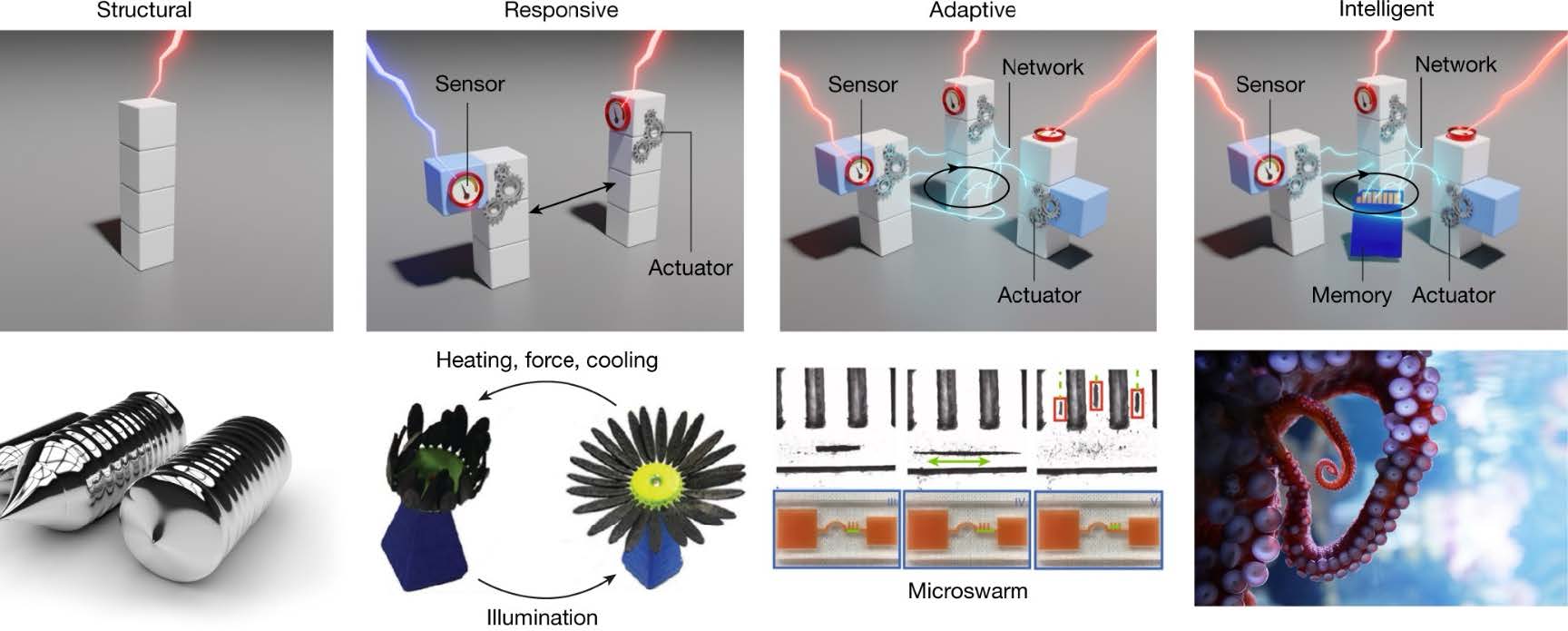
Soft robots are a class of robots constructed from soft, flexible materials designed to replicate the flexibility, adaptability, and compliance observed in biological organisms. Integrating a bio-inspired learning system into soft robots can greatly enhance their ability to adapt and evolve in response to external stimuli and experiences (Figure 1). Neuromorphic computing, inspired by the energy-efficient and adaptive nature of the human brain, offers a promising approach to enable soft robots to process sensory inputs, learn from their environment, and adapt their behavior in real-time.2
Project description
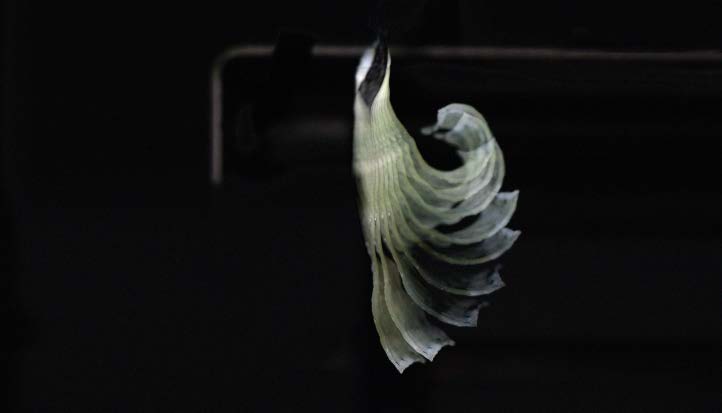
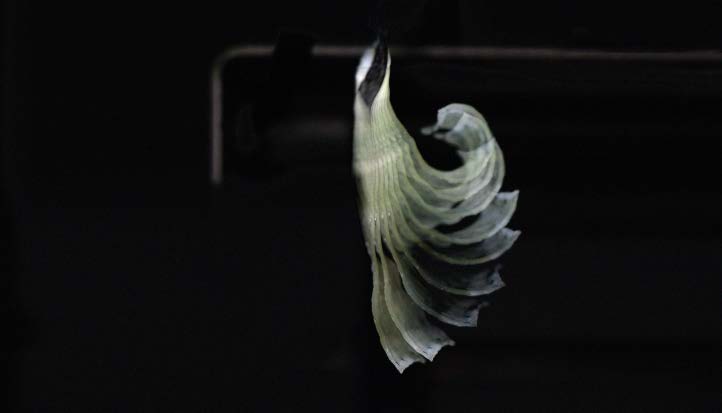
In this project, we aim to enable learning capabilities in soft robots by developing an artificial "brain" using organic electrochemical transistors (OECTs) as artificial synapses. These OECTs will form the physical neural network responsible for processing and storing input signals. The output signals generated by this neural network will be used to control the movements of the soft robots, creating a seamless integration of learning and actuation. To design and construct the soft robots, liquid crystal elastomers (LCEs) will be utilized,3 which exhibit large, reversible actuation in response to external stimuli, such as temperature or electrical signals (Figure 2).
The proposed design / system / device of the project has the following goals:
· Design and implement a learning strategy for LCE-based soft robots, enabling them to adapt their behavior to changing environments. This includes circuit design, sensor integration and hardware communication for real-time learning.
· Other projects, such as designing innovative soft robots, are also available. Feel free to contact us to explore more opportunities.
Required skills
Students with experience on circuit design, sensor integration and programming are preferred. And some knowledge on algorithm development for artificial neural networks would be beneficial.
Contact: Pei Zhang p.zhang1@tue.nl Yoeri van de Burgt Y.B.v.d.Burgt@tue.nl
References
[1] Nature, 2021, 594, 345
[2] Nature Communications, 2024, 15, 4765
[3] Sci. Adv. 2019, 5, eaax5746