Background
Laser powder bed fusion (LPBF) is an additive manufacturing process, extensively used for manufacturing of variety of materials including refractory metals such as tungsten. Tungsten is a rare earth metal with exceptional properties of high density (19 g/cm3) and high melting temperature (3422 °C). Such characteristics makes tungsten a suitable material for medical (X-ray imaging) and energy (plasma-facing) applications. However, tungsten offers a considerable manufacturing challenge during the LPBF process to print a crack (micro-macro) free product specifically at high productivity. This is due to inherent characteristics of tungsten metal, which upon solidification – cooling leads to ductile-to- brittle transition (DBT).
Problem Statement & Goals
In this assignment, impact of post heat treatment will be evaluated on microstructural and mechanical characteristics of 3D printed tungsten Anti scatter grids (ASG). In addition, an impact of these processing conditions on residual stresses – strain of as printed product should be evaluated.
The microstrutral charcterization will include optical and SEM/EBSD analysis, while mechanical characterization will include tensile testing of the printed samples. To quantify the residual stresses-strain suitable destructive / non-destructive approaches will be utilized.
Printing trials and (part of) evaluation will be conducted at the premises of Philips Best.
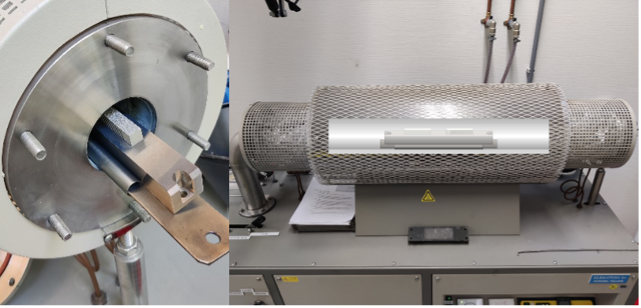
Fig.1 An example image of high vacuum furnace used for post heat treatments at TU/e.
This is an external project at Philips Medical Systems