Research Projects
Explore available research opportunities
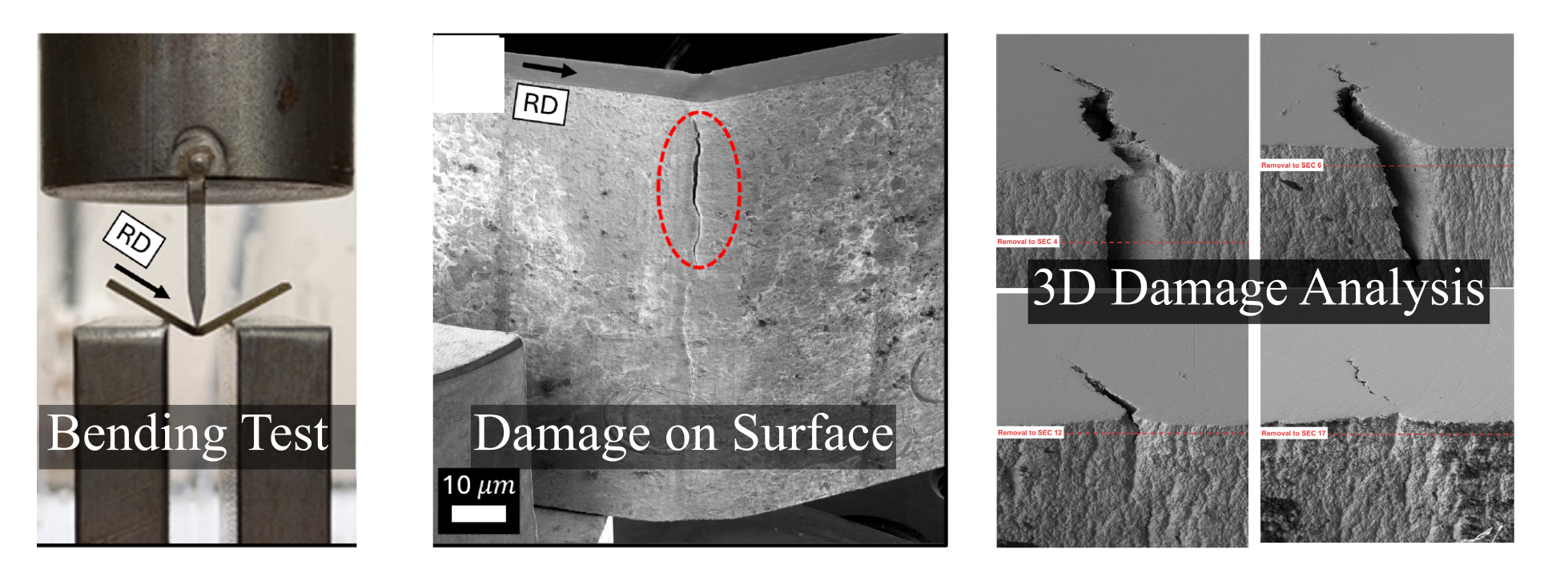
3D Damage Characterization - What's going on under the steel surface?
Cracks during bending are of critical importance, but using regular microscopy we can only see what's going on at the surface. This experimental project will focus on characterizing damage in 3D using serial sectioning and electron microscopy.


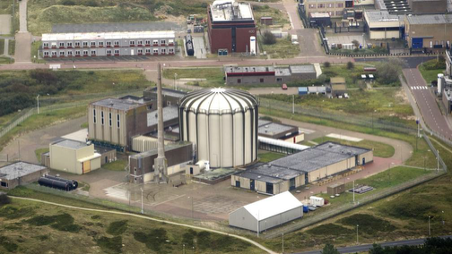
Analyzing the sensitivity of a cluster dynamics model
A cluster dynamics model will be used to study the effect of neutron irradiation on the evolution of the microstructure and the resulting properties of aluminum alloys for structural components of nuclear research reactors.

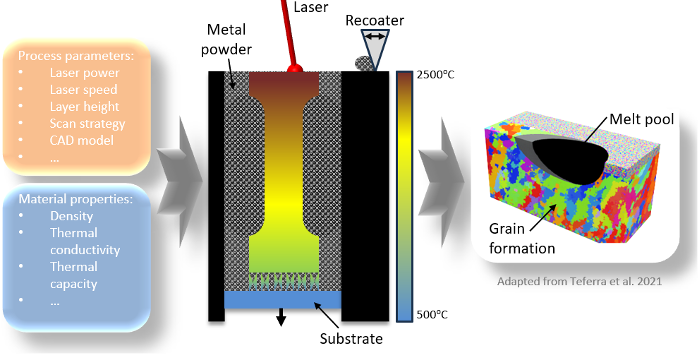
Layer by layer temprature field study of Additively Manufactured Tungsten using LPBF for Fusion Applications
A part-scale model for additive manufacturing of tungsten components for nuclear fusion applications will be developed.
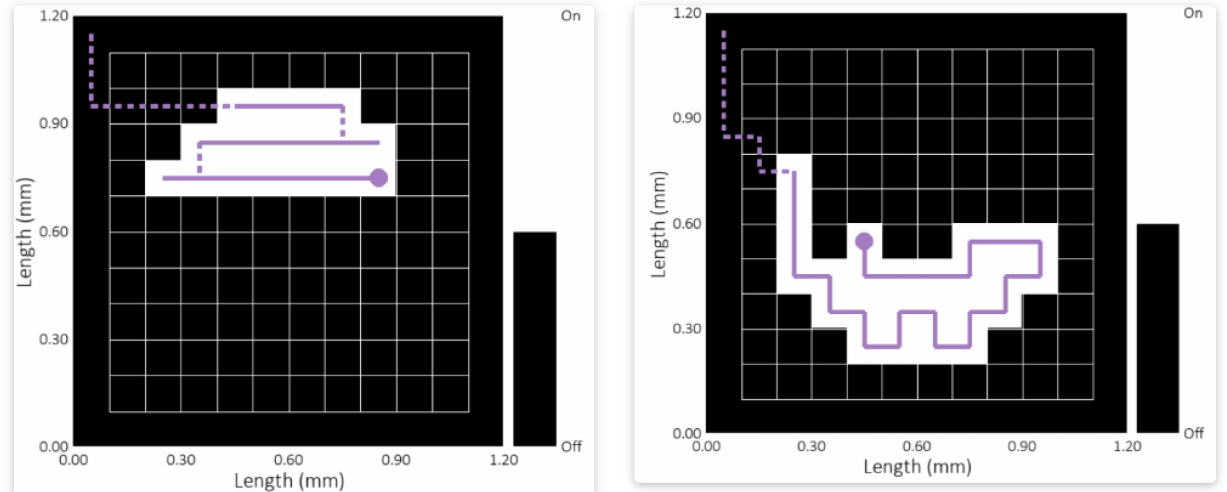
Beat the AI
This project explores rule-based FDM infill strategies using grid models, aiming to outperform AI by reducing moves, material waste, and backtracking on complex geometries printing.

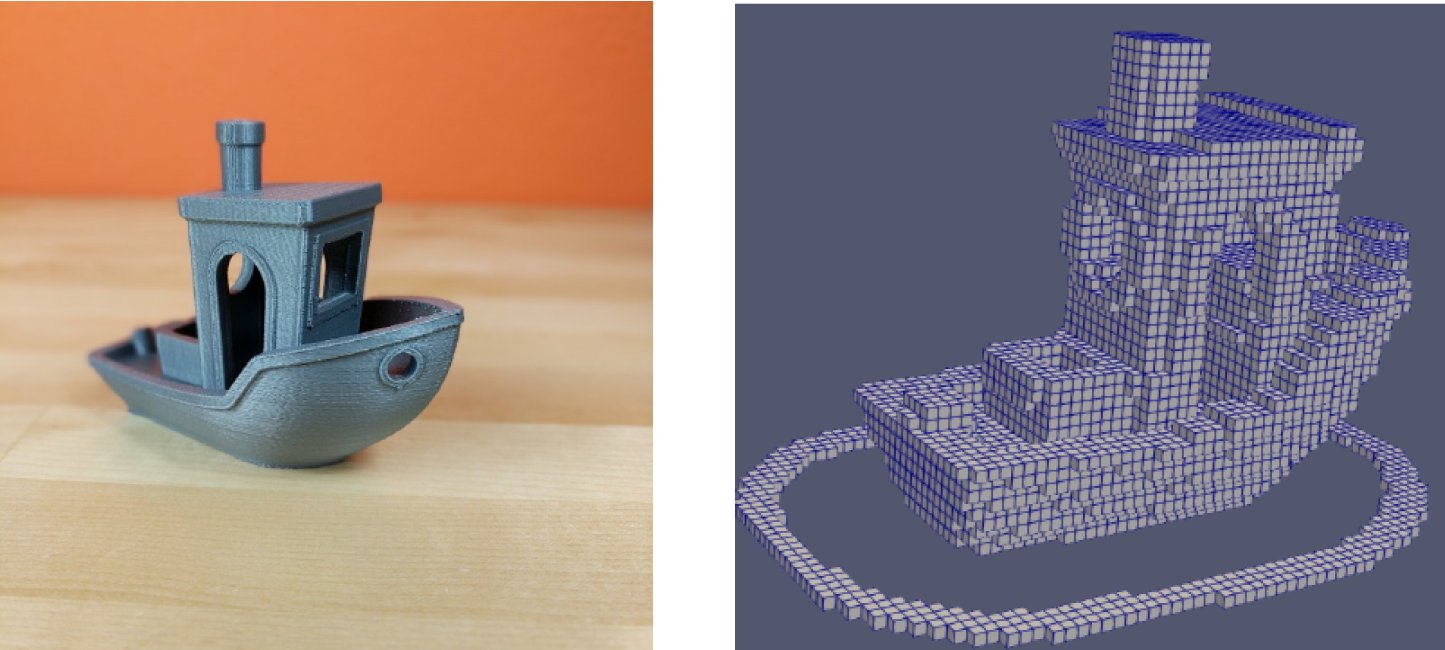
Advancing the Mesh: Enhancing Finite Element Tools for Additive Manufacturing
Enhance a Python tool converting G-code to finite-element meshes by adding belt-printer support, improving performance, and building a GUI for realistic additive manufacturing simulations research.
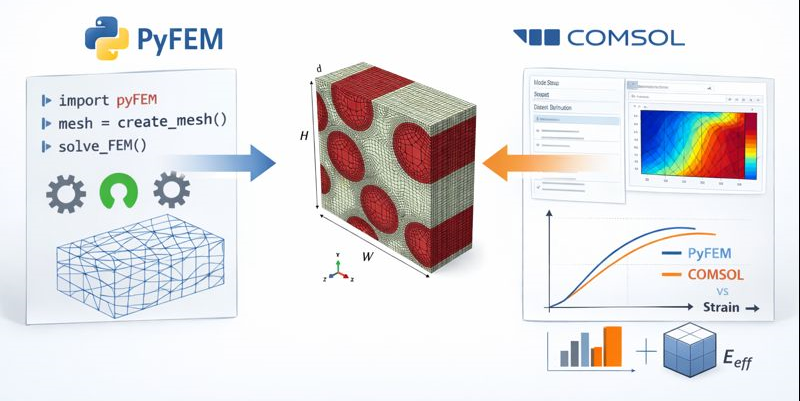
COMSOL vs PyFEM
This Bachelor project compares the open finite-element code PyFEM with the commercial software COMSOL for microstructural materials modelling. The study evaluates modelling flexibility, available material models, numerical performance, usability, and post-processing capabilities using representative homogenization-based case studies.
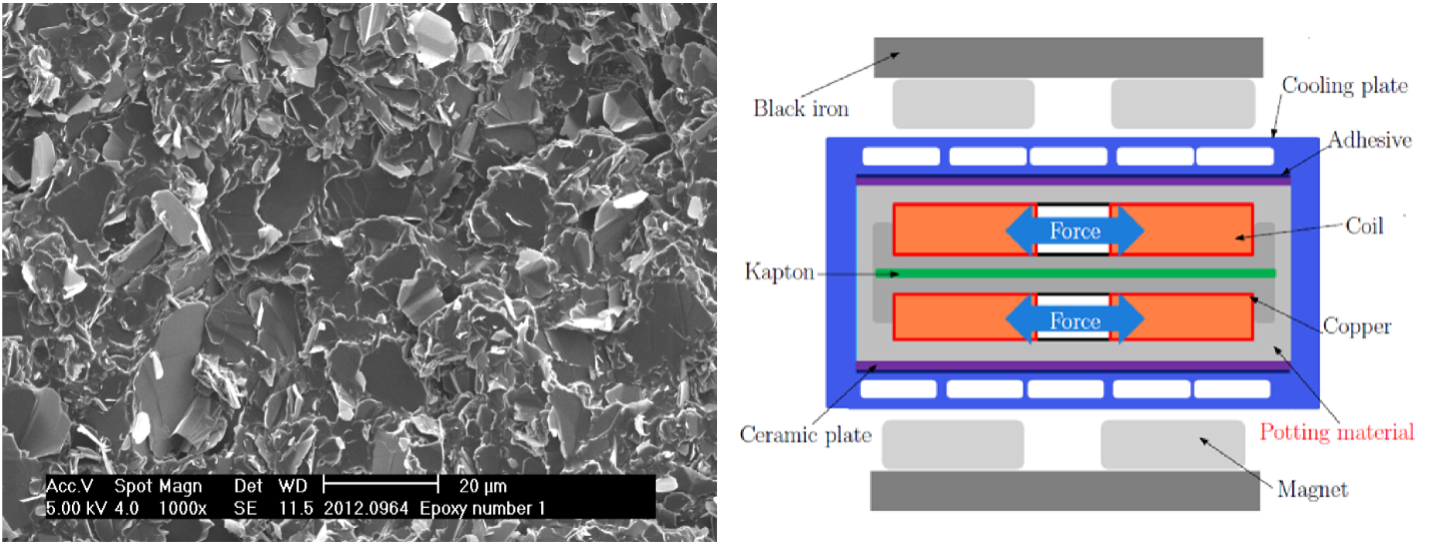
Investigation of the effective thermal conductivity & thermally induced stresses for potting material in electromagnetic actuators
Thermal conduction and the development of thermomechanical stress in heterogeneous potting material used in electromagnetic actuators is simulated using a micromechanical modelling approach.
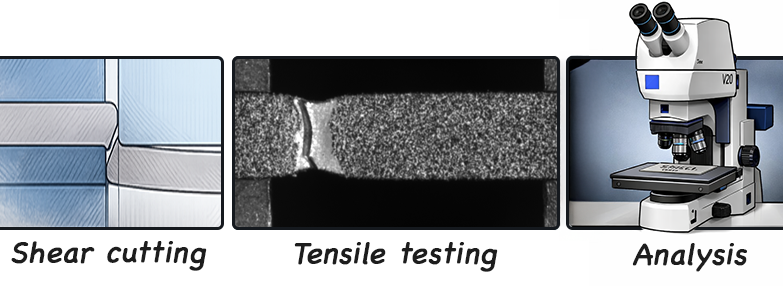
In-situ study of shear cutting effects in Advanced Green Steels
Investigate how shear cutting affects the local ductility and damage evolution of green-produced Advanced High-Strength Steels using in-situ tensile testing and optical microscopy.

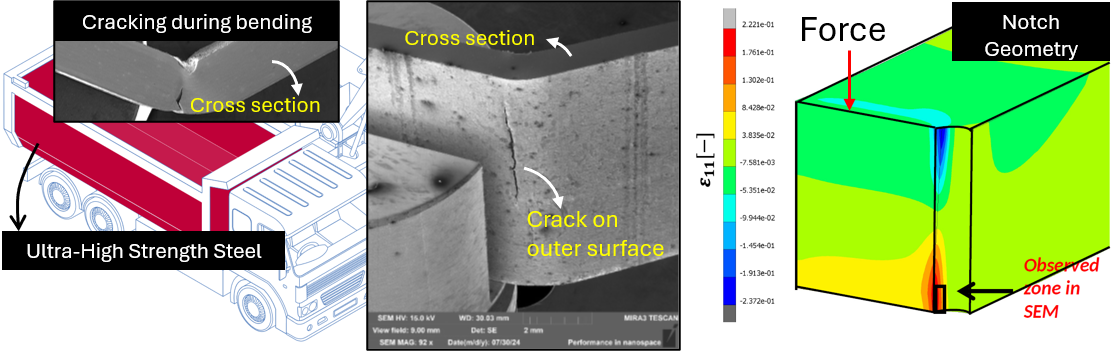
Using numerical simulations to understand (and predict!) damage in notched steel bending tests
You will employ and optimize a numerical model to understand and predict damage for notched high-strength steel bending specimens.
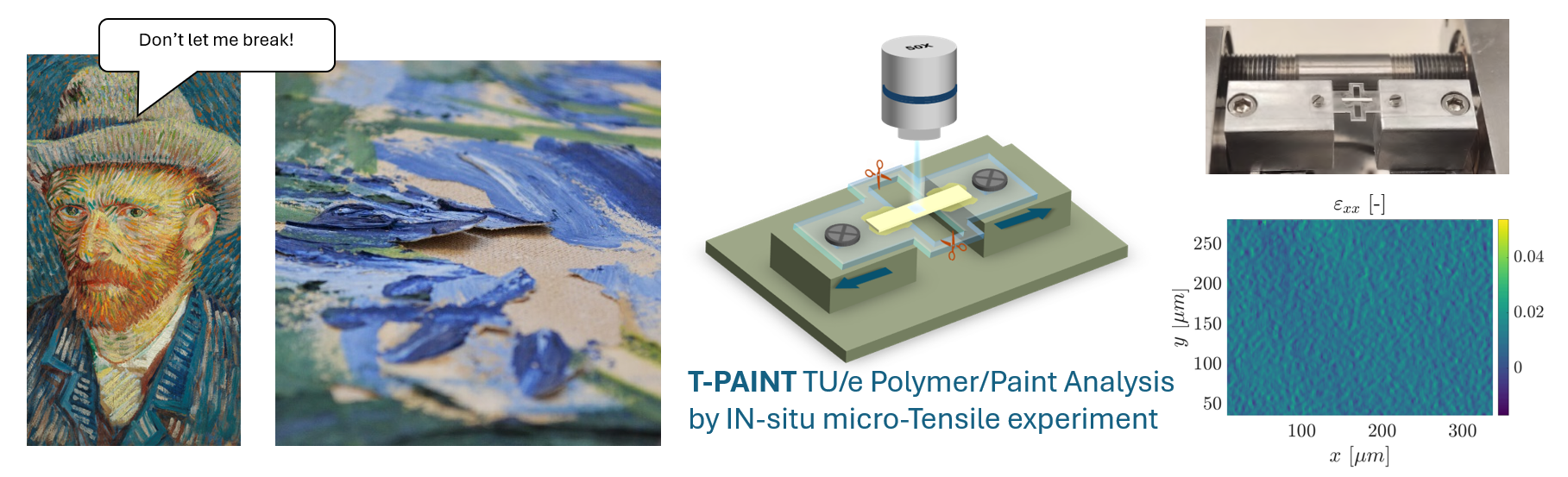
Mechanical properties of oil paints
In this project, we will apply the T-PAINT method on fragile paint samples that are currently being investigated in delamination studies, allowing us to support and clarify the mechanical failure mechanisms of the paint layers.


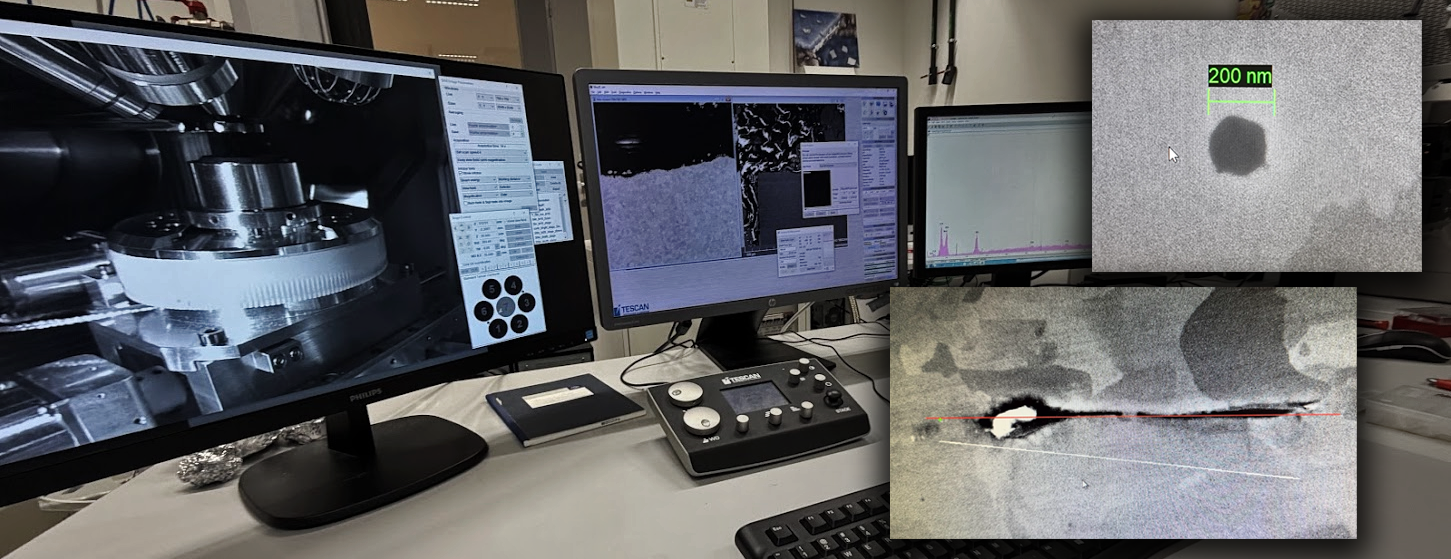
Optimizing Surface Treatments for Electron Microscopy of Green Steel
You will systematically assess and benchmark surface treatment strategies to ensure reliable SEM characterization of nanometer-scale inclusions in advanced high strength steels.
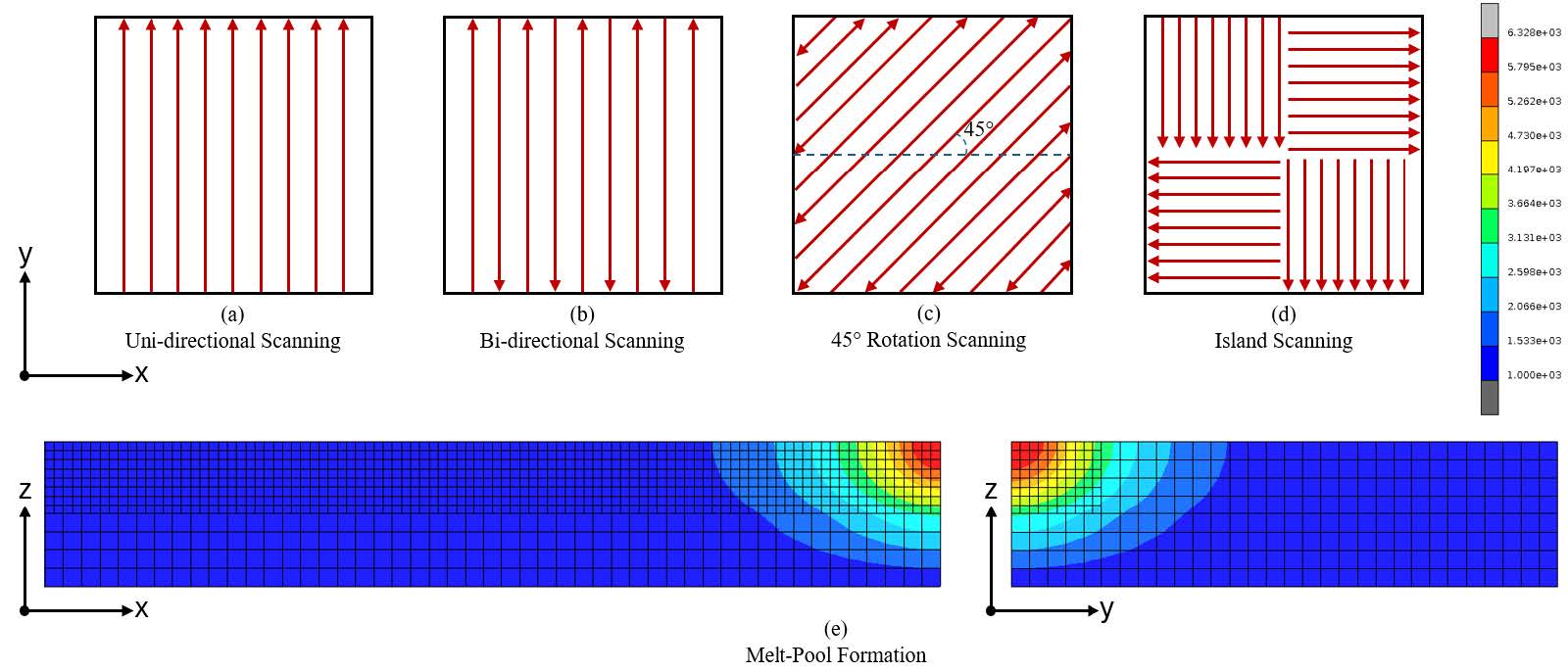
Computational Investigation of the Effect of Scanning Strategies on the Thermal Field in Laser Powder Bed Fusion of Tungsten for Nuclear Fusion Applications
A single layer finite element–based thermal model is developed and used to study the effect of different scanning strategies on the thermal field for laser powder bed fusion of tungsten.